

Nokia 7.1 64GB Review


Nokia 7.1 64GB Price in India
The Nokia 7.1 scores big on display and camera but falls short of its competitor when it comes to performance. The design of the phone makes it a classy looking thing, but the lack of a TPU case in the box is concerning due to the all-glass construction. It's not an all-rounder, but it is great for people looking for a smartphone with a good camera in this budget.
Nokia 7.1 64GB: Detailed Review
HMD Global owned Nokia has been on a strong roll for the last year, launching one popular device after another. The company added another feather to its cap this year when they announced that Nokia devices would join the Android One program, meaning that all Nokia branded smartphones to release would run stock Android. Nokia has a pretty confusing nomenclature scheme, but that shouldn’t distract you from the real highlights of the Nokia 7.1 Sporting the Qualcomm Snapdragon 636 and 4GB RAM, the main USP of the Nokia 7.1 is the HDR10 certified display it rocks. But does the display alone mean that the Nokia 7.1 is a better buy than other smartphones at the Rs 20,000 mark? We find out.
What’s in the Box
The Nokia 7.1 comes in a pretty simple, no fuse box. Inside, you will find the phone, a 10watt charger with a USB-C cable and a pair of earphones that look like what Nokia used to offer back in early 2000s. There’s also the standard SIM tray removal pin along with a few leaflets of documentation.Nokia 7.1 Key Specifications
Processor: Qualcomm Snapdragon 636RAM: 4GB
Storage: 64GB (expandable)
Rear Camera: 12MP primary camera with f/1.8 aperture + 5MP secondary depth sensor
Front Camera: 8MP f/2.0
Display Resolution: 1080x2240
Display Size: 5.84-inches
HDR10 Support: Yes
Battery: 3060mAh with Fast Charge support
Build and Design
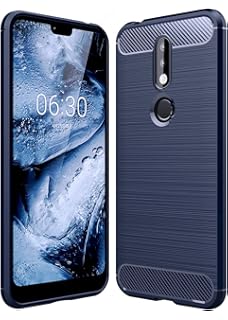
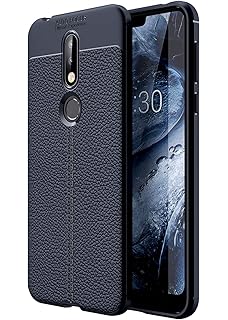
The front of the Nokia 7.1 is all glass with the display taking up most of the real-estate. The 19.5:9 display panel has fairly slim bezels, save for the bottom chin which is larger than even the Nokia branding that resides on it. On top, the notch is considerably small, housing just the front-facing camera and a tiny speaker grill. The bottom of the frame houses a USB Type-C port with the cutout of the speaker and microphones. The volume rocker and the power button are placed on the right side of the frame and carry the same colour and accent treatment as the rest of the frame.
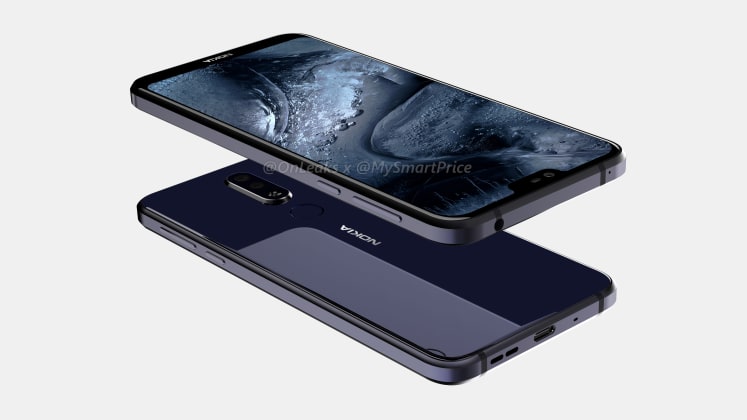
All in all, the Nokia 7.1 could easily pass off as a smartphone that is playing in a league far above its own. The design is elegant and functional. What does keep it from being a premium build is the lack of things like an IP rating, but we are honestly not complaining. What you should genuinely be worried about, however, is the all-glass build, which is easily going to break if it makes contact with the ground from a height more than a foot and a half.
Display
The display on the Nokia 7.1 is one of the main highlights of this phone. When LG brought an HDR10 and Dolby Vision certified display to the Rs 40,000 mark, everyone thought it was a huge deal. Now Nokia has brought an HDR10 capable LCD display to the Rs 20,000 mark and that by itself is a huge deal. This means the display is capable of going up to 1000 nits by virtue of the HDR10 compliance. As of now, however, HDR playback through Netflix is not supported but should come soon.The display otherwise looks extremely crisp and vibrant with nice colours, but the display’s white balance is tuned slightly towards the cooler side. Unfortunately, the Nokia 7.1 does not allow the tweaking of display colours, only offering the option to turn on or off the HDR10 setting (which doesn’t do much for SDR content).

Overall, the display on the Nokia 7.1 is impressive for its peak brightness and vibrant colours, but the lack of white balance tuning makes it less than ideal for content creation. Also, having HDR10 compliance is great, but Netflix doesn’t support streaming in HDR to the Nokia 7.1 yet, leaving you limited to YouTube HDR and other unconventional sources of HDR videos.
Performance and Software
The Nokia 7.1 sports the Qualcomm Snapdragon 636 processor paired with 4GB of RAM on our review unit. The Snapdragon 636 is Qualcomm’s mid-tier processor sitting just below the Qualcomm Snapdragon 660. For the price, the Snapdragon 636 might feel a little underwhelming, but the promise of stock Android is that it should get the most out of whatever hardware its being run on. In order to figure out what’s going on with our review unit of the Nokia 7.1, we ran it through our standard set of benchmark tests. The review unit we received was running on Android 9.0 out of the box and at the time of writing this review, had not received any further OTA updates.Starting off with a measure of CPU performance, the Nokia 7.1 scored 1334 and 4443 on Geekbench’s single and multi-core tests. 3DMark’s Sling Shot Extreme did stress out the graphical capabilities of the phone, giving it a score of just 935. The Redmi Note 6 Pro, which sports the same CPU scored 1474 on the same test, although the review unit in question had 6GB of RAM. In terms of benchmark numbers, the Nokia 7.1 does not climb to the top of our charts of phones with similar spec, something we were genuinely surprised to see given the stock Android configuration on this device.
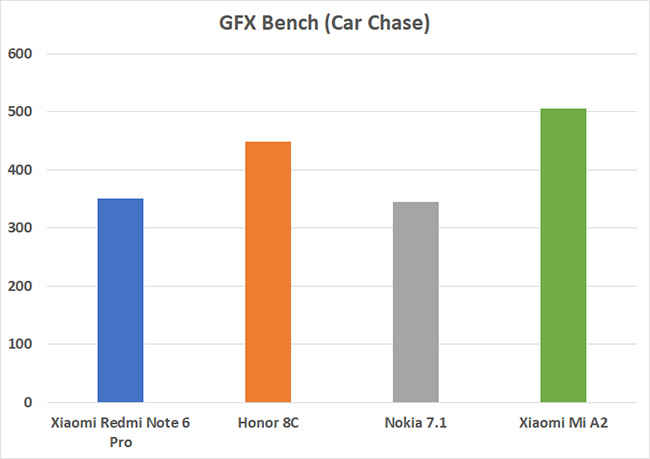
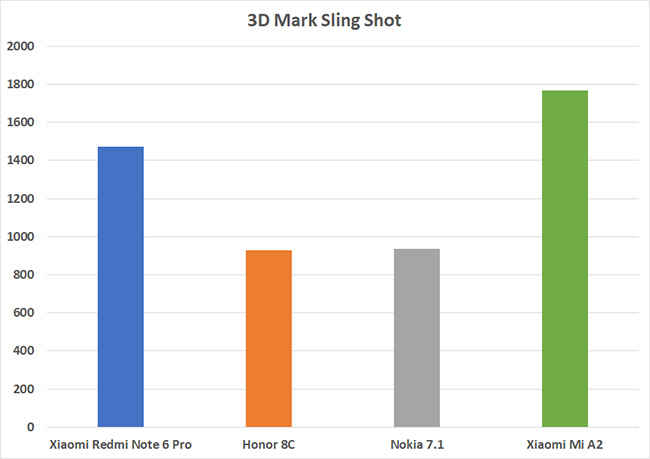


When we consider any smartphone running stock Android, there is the expectation of its performance being better than those smartphones who offer heavily skinned versions of the OS. Maybe this is an incorrect expectation to have, but whichever way one looks at it, the Nokia 7.1 could have done better, especially when it comes to gaming.
The software running on our Nokia 7.1 review unit was Android 9.0 out of the box and no OTA update has been rolled out during the course of this review. The OS uses the gesture-based navigation by default and it works well. If you have used a Google Pixel smartphone with the Android 9.0 update, you would be used to the way this works. If not, then the learning curve isn’t very steep. You may have some initial moments of frustration when trying to get to the multi-tasking window or the app-drawer as they both rely on the same gesture, but different levels of force. The OS is clean and easy to navigate through, be is system menu or just general settings. Having stock Android on a phone is probably one of the best software experiences you can have on a smartphone and that for the most part is what the OS feels like on the Nokia 7.1. One area where there is a noticeable bug is on the lock screen. You can double tap the camera button to engage the camera directly from the lock screen. However, many times there would be a keypad overlay on the camera interface, but it won't allow the pin to be input. This didn’t happen every time, but it did happen enough times for it to be troublesome.
Camera
The Nokia 7.1 sports a dual camera setup with a 12MP primary camera and a 5MP secondary depth-sensing camera. The two shooters are complimented by Zeiss branded lenses with apertures of f/1.8 and f/2.4 respectively. On the front, there is a 8 megapixel with an aperture of f/2.0
That one camera bug aside, the images themselves are pretty impressive. The rear camera produces sharp images, a strong suit of the Zeiss lens. The images have excellent centre sharpness, with the edges being acceptably sharp as well. The colours pop out at you in images shot on the Nokia 7.1, especially when viewed on the phone itself. The AF works acceptably fast but is almost always accurate to lock focus. Daytime photos give us no reason to complain at all. It is only in low light where the camera starts to falter with slow focusing and excessive noise reduction in images leading to quality loss.

The front facing camera proves to be a surprisingly good shooter as well, sharing almost all the image characteristics as the images produced from the rear camera. The 24mm lens on the front has very little distortion so as to ensure that faces don’t look exaggerated in photos.
The camera also offers a pro mode, something that Nokia made a big splash with back in its Lumia days. The controls are easy and intuitive to work with and anyone willing to experiment a little would love using this mode for greater control. Sadly, there is no option to shoot in RAW though. The Live Bokeh mode also worked well, with the camera interface giving a visual confirmation to when it would detect the subject and implement the bokeh. There is a slider one can adjust to determine how much “blur” you want your background to be, but we recommend being judicious with it and not go overboard.
Overall, the images produced by the Nokia 7.1’s rear and front-facing cameras have beautiful color reproduction, with good sharpness. The dynamic range is average, but that is common across all shooters in this price segment. The ability to capture images in RAW would have earned the Nokia 7.1 a few extra points in our review, so hopefully, Nokia would bring the feature in a future update.


 Hello, my name is Jack Sparrow. I'm a 50 year old self-employed Pirate from the Caribbean.
No comments:
Post a Comment